
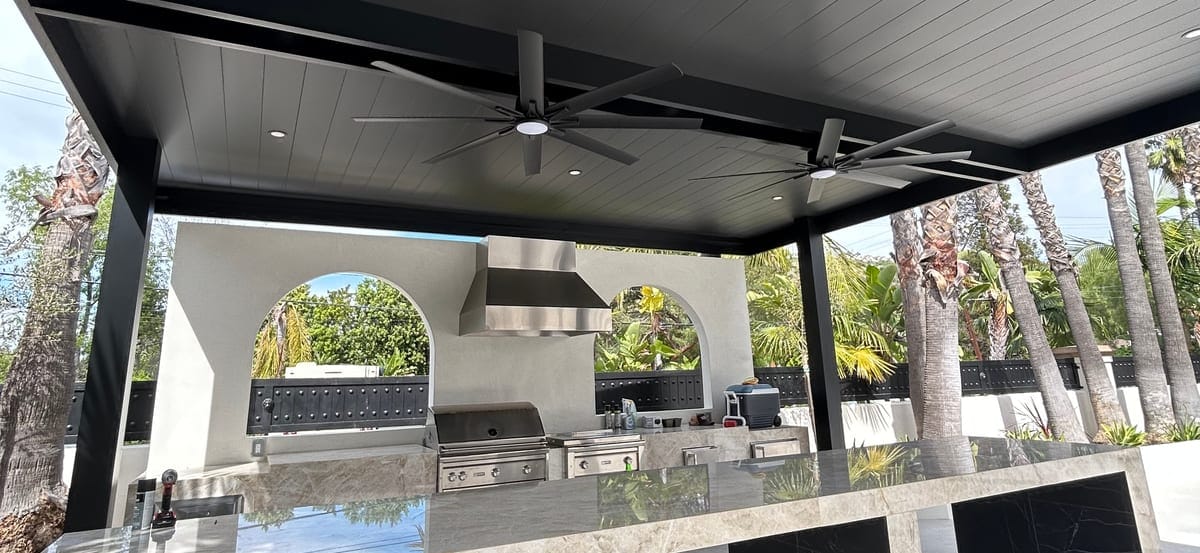
Outdoor kitchens have gone from a luxury add-on to one of the most requested features on our projects. Building one under a patio cover is absolutely the right move — it protects the appliances, makes the space usable in any weather, and turns a barbecue into a room. But it introduces requirements that a plain shade structure does not have, and almost all of them are cheaper to handle before the cover is built.
1. Clearance and Venting Come First
This is the part people skip, and it is the part that matters most.
A built-in grill under a solid roof needs adequate vertical clearance and, in most configurations, a vent hood ducted through or beyond the cover. Manufacturers publish minimum clearance between the grill surface and any combustible or finished ceiling, and those numbers are not suggestions — grease-laden smoke that has nowhere to go will stain an aluminum ceiling permanently and, at worst, becomes a fire concern.
Practical guidance: confirm the required clearance from your specific grill's manufacturer, plan a hood sized to the cooking surface, and decide the duct route before the cover is engineered. Retrofitting a hood duct through a finished insulated panel is possible but ugly and expensive.
The cheapest fix is the earliest one. Running gas, water, and electrical stub-outs while the patio is open and the cover is still on paper costs a fraction of trenching a finished patio and fishing conduit through a completed structure later. Even if the kitchen is phase two, put the utilities in during phase one.
2. Plan the Utilities Before Installation
- Gas: a dedicated line sized for the grill's BTU rating, plus any side burner. This is a permitted, licensed-plumber item in every jurisdiction we work in.
- Electrical: GFCI-protected outlets for the refrigerator, ice maker, and any powered appliance, plus separate circuits for the hood and for cover-mounted lighting and fans.
- Water and drain: if you want a sink, you need supply and a legal drain connection. This is the single most common item that gets cut when homeowners discover the drain requirement late.
- Low-voltage: speakers, an outdoor TV, and cameras all want conduit run before the ceiling closes up.
3. The Cover Type Matters More Than Usual
For an outdoor kitchen, an insulated cover is the clear choice. It gives you a flat, finished, wipeable ceiling; it takes recessed lighting cleanly over the work surface; it blocks the radiant heat that would otherwise combine with grill heat to make the cook miserable in August; and it keeps rain off appliances that are expensive to replace.
Lattice over a full kitchen is a mistake we occasionally get called in to correct. Rain reaches the appliances, sun still hits the cook, and there is no clean ceiling for a hood or lighting.
4. Layout: Leave Room to Work
Two dimensions decide whether the kitchen is pleasant to use. Allow generous clear space behind the cook so people can pass without brushing a hot grill, and give yourself uninterrupted landing counter on both sides of the grill — somewhere to set the platter down is what separates a working kitchen from a barbecue on a slab.
If you are adding a bar counter with stools, plan for the overhang and the stool depth in your total footprint. That row of seats is often what pushes the cover's required projection out by several feet. Our sizing guide covers how to work that back into the structure.
5. Lighting the Work Surface
Ambient lighting is not enough to cook by. Plan recessed downlights directly over the grill and the prep counter on their own switch, separate from the mood lighting over the dining area. Warm-white dimmable LEDs at both zones give you a kitchen at 6 PM and a lounge at 9 PM. Full lighting guide here.
6. Materials That Survive Outdoors
Cabinet boxes should be marine-grade polymer, powder-coated aluminum, or masonry — not standard MDF or particle board, which will not survive a single humid winter. Countertops in porcelain, granite, or dense quartzite hold up well; some engineered quartz will discolor under UV, so confirm the specific product is rated for exterior use. All appliances and fasteners should be 304 or 316 stainless, and 316 if you are anywhere near the coast.
Worth It?
An outdoor kitchen under a proper cover is among the most-used improvements our customers report, and it reads strongly to buyers because it is visibly a permanent, finished space rather than a portable setup. More on how covered outdoor space affects home value.
Related Articles
Get a Free On-Site Estimate
Serving Orange County, Los Angeles County, and surrounding communities. No pressure, no obligation — just expert advice and an accurate quote for your specific project.
Request Your Free Estimate